
- B-2/5 Safdarjung Enclave, New Delhi-110029
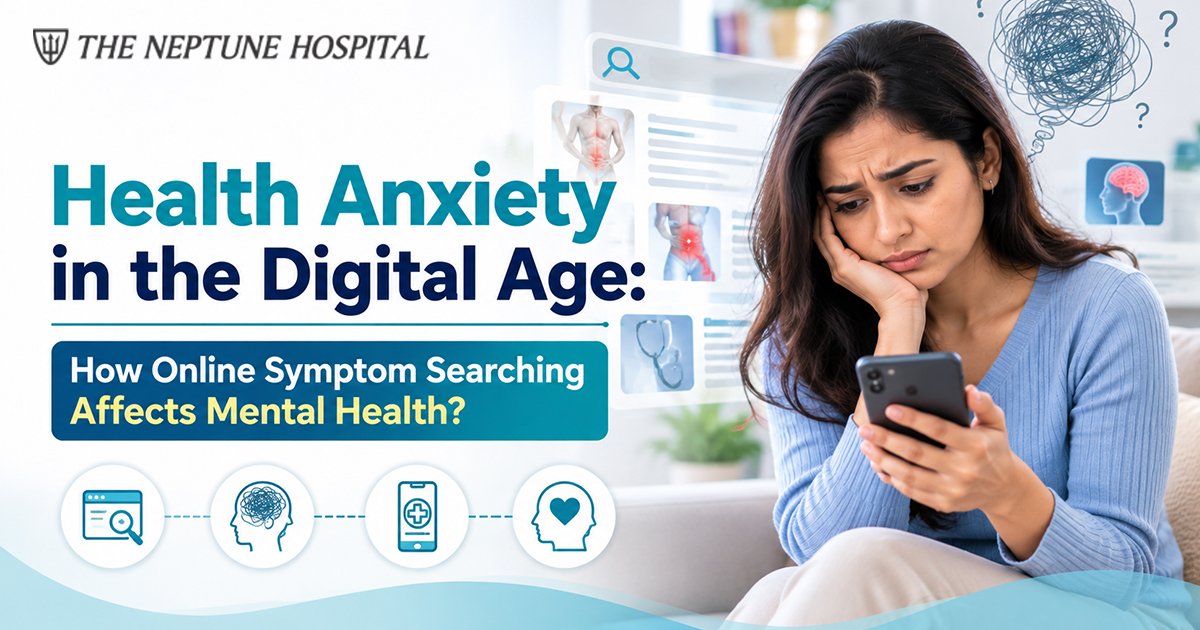
Health Anxiety in the Digital Age : How Online Symptom Searching Affects Mental Health
Have you ever searched for a simple headache online and ended up worrying about something far more serious? You're not alone. A quick Google search can turn an ordinary health concern into hours of fear, endless scrolling, and sleepless nights.
Welcome to the digital age, where medical information sits just a few taps away, but peace of mind doesn't always come with it.
When Searching for Answers Creates More Anxiety
The internet has changed how people approach their health. A person experiencing mild stomach discomfort might search for possible causes, read a few articles, visit online forums, and compare symptoms with other people's experiences. What starts as a sensible attempt to understand the body can quickly become an exhausting cycle of worry.
The problem is that online information often presents a long list of possible causes, ranging from harmless conditions to serious illnesses. Without medical training, distinguishing between them isn't easy. A common symptom such as fatigue, for example, could be linked to poor sleep, stress, nutritional deficiencies, or numerous medical conditions.
And suddenly, the mind jumps to the worst possibility.
This pattern of excessive worry about having a serious illness is often associated with health anxiety. Repeated symptom searching can intensify that anxiety, especially when someone constantly seeks reassurance but never feels satisfied with the answers.
How Online Symptom Searching Affects Mental Health
The effects go beyond a few moments of nervousness. Repeatedly searching for symptoms can influence everyday life in several ways.
1. Increased fear and overthinking
Every new article can introduce another possibility to worry about. Instead of feeling reassured, people may become increasingly convinced that something is wrong, even when they have little evidence to support that belief.
2. Constant checking and reassurance-seeking
Some people repeatedly check their pulse, examine their skin, or search for the same symptoms across different websites. The relief may last a few minutes, but the uncertainty soon returns. The cycle begins again.
3. Sleep disturbances and difficulty concentrating
Health-related worries can follow people into bed, interrupt their sleep, and make ordinary responsibilities harder to manage. Even a minor sensation may become difficult to ignore once the mind starts analysing it repeatedly.
4. Delaying appropriate medical care
Online searching can sometimes create false reassurance, while in other cases it can cause unnecessary panic. Neither is ideal. Relying on internet searches instead of professional assessment may delay the right care or lead to avoidable distress.
Breaking the Cycle of Digital Health Anxiety
The solution isn't to stop using the internet altogether. It's to use it wisely.
Start by limiting repeated symptom searches. Choose reliable medical sources rather than anonymous discussions, alarming headlines, or unverified social media posts. Remember that information written for a general audience cannot account for your complete medical history, examination findings, or individual circumstances.
Pay attention to patterns, too. If you find yourself searching for symptoms every day, constantly seeking reassurance, or struggling to control fears about your health, consider speaking with a qualified healthcare professional or mental health specialist.
Most importantly, don't dismiss genuine symptoms simply because anxiety might be involved. A professional assessment can help distinguish between medical concerns that need attention and fears that may benefit from psychological support.
Seek the Right Guidance at Neptune Hospital
When health worries become difficult to manage, reliable medical guidance can make a real difference. At Neptune Hospital, patients can seek appropriate medical evaluation for health concerns and guidance on the next steps in their care.
For individuals looking for the Best Hospital in Delhi, making informed healthcare decisions means looking beyond online symptom checkers and choosing professional assessment when needed. A consultation can help clarify concerns, identify whether further investigation is appropriate, and reduce confusion caused by conflicting information online.
Health information should empower you, not frighten you.
Finding Balance in a World of Endless Information
The internet can be useful, but it cannot replace a proper medical consultation or offer certainty about every symptom. Your body deserves attention, and your mental well-being deserves the same care.
So, the next time an unfamiliar symptom sends you reaching for your phone, pause before opening another search result. Take a breath. Consider whether you're looking for useful information or simply trying to silence uncertainty.
Sometimes, the healthiest next step isn't another search. It's a conversation with a healthcare professional.
All Blogs
- ⇒ Health Anxiety in the Digital Age : How Online Symptom Searching Affects Mental Health
- ⇒ Endometriosis in Women: Symptoms, Diagnosis, and Treatment Options
- ⇒ Cancer in Young Adults: Causes, Awareness, and Prevention
- ⇒ Why Self Medication Can Be Risky The Importance of Consulting a Doctor
- ⇒ Joint Pain That Won't Go Away, Here's When You Need an Orthopedic Specialist
- ⇒ How Healthy Are Your Lungs? 12 Warning Signs You Shouldn't Ignore
- ⇒ 10 Common Skin Problems During the Monsoon and How to Prevent Them
- ⇒ Managing Respiratory Allergies in Rainy Season
- ⇒ Chemotherapy Myths and Facts Every Family Should Know
- ⇒ Chemotherapy vs Radiation Therapy: Understanding the Difference
- ⇒ Best Winter Exercises for Strong Bones & Healthy Joints
- ⇒ Top 5 Mistakes to Avoid When Choosing the Best Maternity and Gynaecology Hospital in Delhi
- ⇒ Why Women’s Health Needs Special Attention at Every Stage of Life
- ⇒ How Stress Affects Your Gynecological Health and Ways to Cope
- ⇒ What Is Polycystic Ovary Syndrome (PCOS) and How Can a Gynecologist Help?
- ⇒ Your First Gynecologist Visit What to Expect and How to Prepare
- ⇒ The Silent Struggle | Understanding and Treating Muscle and Joint Pain